Custom Search

Monday, March 21, 2016

Lucanus planeti Planet, 1899

A quite common species that found from Thailand, Vietnam and South China (Yunnan, Shichuan, Guangxi); they are very varietal in body size. It close to Lucanus vitalisi and Lucanus laminifer but clearly difference in structure of clypeus.


Male of Lucanus planeti Planet, 1899

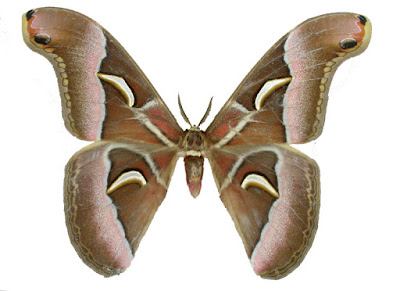
Samia vuvanlieni Naumann, Peigler & Läffle, 2014

A new described species of Saturniidae in 2014, the species is large size moth that found from Bidoup National Park, Lam Dong Province, they also were recorded in Kon Tum and Da Nang Province. The species is largest moth of the genus, two smaller related species are S. watsoni and S. formosana. Mature form found in high elevation habitat, about more than 1500m.


Samia vuvanlieni Naumann, Peigler & Läffle, 2014 - dorsal view of male


Saturday, March 19, 2016

Thranius multinotatus multinotatus Pic, 1922

Thranius multinotatus multinotatus Pic, 1922 is a member of tribe Thraniini, subfamily Cerambycinae. They are wasp mimic cerambycinae beetles with the reduced elytra which be slender apically. Thranius multinotatus is wide distribute species, from Tibet to Japan (in some islands) and down to Indochina, however it is hard to be sure that they all be a same species. In my collection, Thranius multinotatus multinotatus Pic, 1922 was collected from Ha Giang, North Vietnam.
Thranius multinotatus multinotatus Pic, 1922 - dorsal view


Thranius multinotatus multinotatus Pic, 1922 - lateral view


Thranius multinotatus multinotatus Pic, 1922 - oblique view


Tricondyla (Tricondyla) mellyi Chaudoir, 1850

A species belong to Cicidelidae (Tiger beetle), Tricondyla (Tricondyla) mellyi Chaudoir, 1850 is an interesting species. The species was recorded from China, Vietnam, Laos, Thailand and Myanmar; no record from Cambodia has been reported yet but it must be also found in the country.

In Vietnam, there are 132 recorded species of Cicidelidae and 11 species of Tricondyla have been found from the country.


Head, close up

Detail structure of the elytra

Friday, March 18, 2016

Aphrodisium (Aphrodisium) cantori (Hope, 1840)

A shining blue (and green in some cases) metallic insect, they are medium to large size long horn beetles. They are wide distribution in Indochina area however not common even locally. Matures found in middle or late of summer every year and only found in pristine forests. A brighten and very beautiful insect.

Aphrodisium (Aphrodisium) cantori (Hope, 1840) dorsal view
Aphrodisium (Aphrodisium) cantori (Hope, 1840) lateral view


Aphrodisium (Aphrodisium) cantori (Hope, 1840) head in close view


Aphrodisium (Opacaphrodisium) griffithi Pic, 1932

The species is the second species of subgenus Opacaphrodisium. Its related species Aphrodisium (Opacaphrodisium) alabardae was recorded from Java, Indonesia. A. griffithi found from Myanmar, Laos, Vietnam and maybe also South China. The subgenus is an evidence of relation of Indochina and Indonesia-Malaysia fauna.


Aphrodisium griffithi - lateral view


Aphrodisium griffithi - dorsal view


Aphrodisium griffithi - Head close up

Tuesday, March 8, 2016

How to prepare butterfly specimens

A quick guide for preparing butterfly specimens, step by step:
1. Insect specimens as butterflies, moths, dragonflies were collected from the field and keep in dried condition with folded wings and in the butterflies envelope.

2. Before mounting the specimens, we need to relax them and make them flexible wings/body, preparing a plastic box with lid.


3. Preparing a rack that fit on the plastic box, you can find the similar items or just make an rack on your way with stick and some wood pieces. In this case I used a plastic rack.


4. And set the rack into the box


5. Add the room temperature water to the box. DO NOT USE HOT WATER and keep the water lever lower than the upper surface of the rack (keep the rack surface be dried). The hot water with steam as well as wet and sticky surface rack will be reason that the wings of butterflies lose the scales.


6. Release the butterfly from its envelope and carefully put them on the rack.
  

7. You also can keep put the whole envelope with butterfly inside on the rack, however I hate to open wet envelope after that. You also can access several specimens at same time.


8. Close the lid of the plastic box in several hours, time up to how your specimens dried. An overnight duration is an usual standard, in some case it take some days.


9. Check the specimens if they are flexible by an insect forceps. Only begin mounting the butterfly as you sure that the wings can open easily and flexible.


9. Mounting the butterfly with a foam board and insect pins.


10. And compile pinning the specimen, keep them dried in room temperature or you can put them in an incubator but do not set the temperature too high. You also can keep the pined specimens in a box with silica gel or just simple keep them in a dried room.


11. Add data label and keep them in entomological collection box.


Thursday, March 3, 2016

Trichogomphus robustus Arrow, 1930

A medium small Dynastid beetle, they found in high mountain forest of North Vietnam, Laos and South China.
Female litter smaller than male, they are black or somehow reddish insects. Flying season about May - July.


Trichogomphus robustus Arrow, 1930; male

Wednesday, March 2, 2016

Priotyrannus closteroides (Thomson, 1877)

A quite common species that found in Indochina, they are high elevation forest insects that can be collected mainly by light trap. Small to medium size, the body covered with shining yellow hair.
Season of mature about May to July, they must be found in South China and Laos as well, they are not so common but locally there were not many individuals be observed. Male and female similar in shape.

Priotyrannus closteroides (Thomson, 1877), male

Aegosoma katsurai (Komiya, 2000)

The species was described based on holotype that collected from North Vietnam, recently they also found in Southern mountain forest of Vietnam and Laos as well. In publication by Do, 2015 of the genus, author proposed the species related to A. curnecornis from Myanmar because similar in structure of antenna. Evolution of two species of the group were proposed independent in Indochina area where separated from fauna of Indonesia-Malaysia lands.
They are medium size insects, male and female quite similar in shape. Southern individuals somehow larger than species found in North Vietnam.

Aegosoma katsurai (Komiya, 2000), male